I Thought Exercise Was Something You Earned
For most of my life, I believed exercise was a consequence. It was what you did after you ate too much, gained weight, or felt like you’d “fallen off track.” Movement wasn’t something I looked forward to. It was something I used to try to fix myself.
Like a lot of women, I’ve been through the full lineup of diet culture trends. Diet pills, keto, the cabbage soup diet, crash dieting, low fat, low carb, low flavor and devoid of joy. I spent years chasing quick fixes and short-term results, hoping each new approach would finally be the one that stuck.
I also used GLP-1s as part of my journey, and I’m not going to pretend otherwise. It helped me shed the weight I needed to lose for my physical health. But what it didn’t do was heal my relationship with my body or with movement. That part took a lot longer.
Yes, I’ve lost 100 pounds. But the bigger story is what came after, because losing the weight didn’t automatically change how I saw myself. I still struggled with body dysmorphia. I still had days where the mirror felt like an enemy. That disconnect forced me to confront something deeper than weight. It made me realize that if I didn’t change my mindset, I would always feel like I wasn’t enough.
The Turning Point: Movement as Self-Respect
The shift started with a simple question. What if exercise wasn’t about punishment at all? What if it were about taking care of myself?
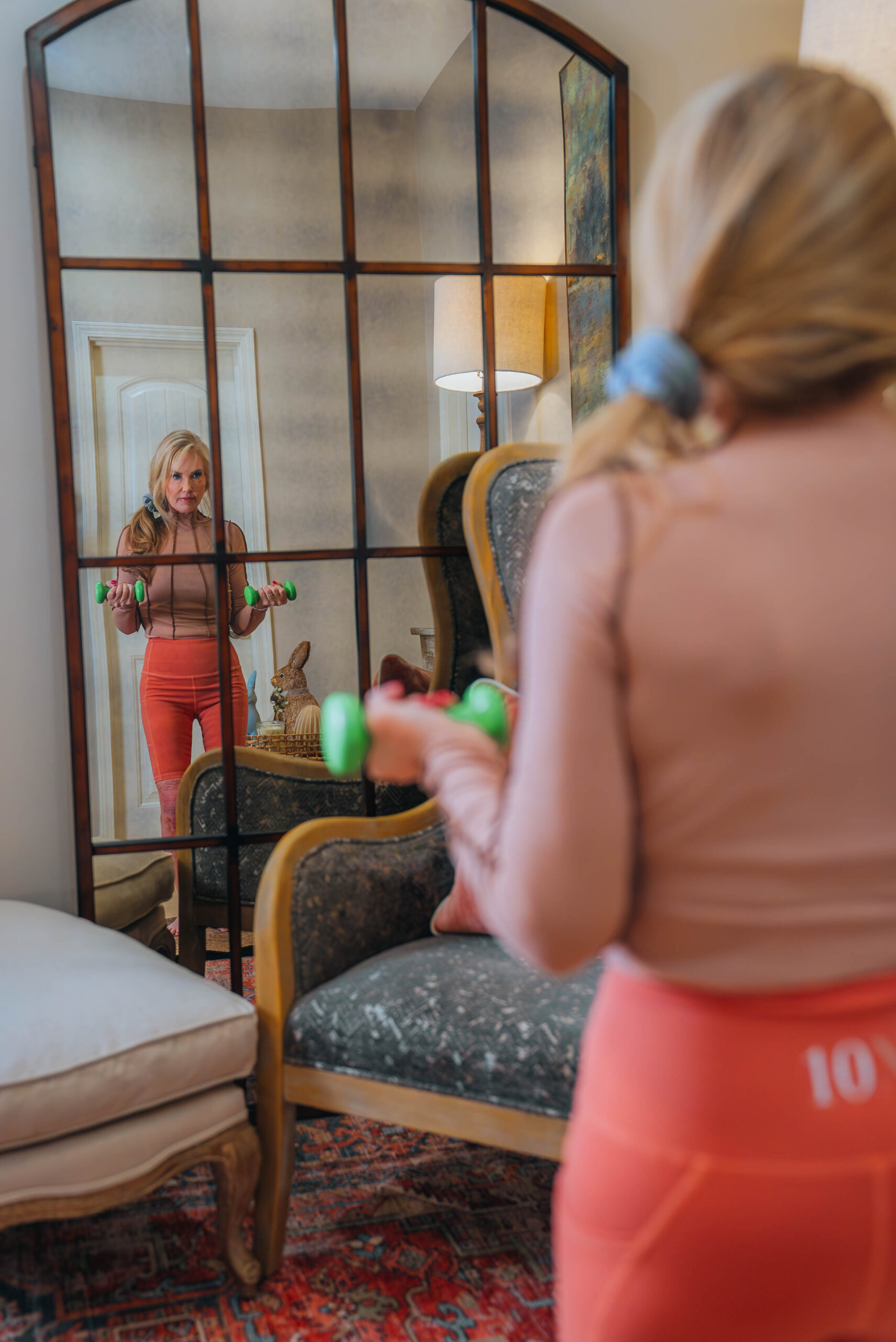
Instead of focusing on calories burned or inches lost, I started paying attention to how I felt after I moved. I noticed I was calmer, clearer, and more grounded. I slept better. My energy improved. I felt more like myself.
There’s real science behind this. Regular physical activity has been shown to reduce symptoms of anxiety and depression and improve overall mental health. Other research shows that movement can improve body image and self-esteem by shifting the focus away from appearance and toward what your body can do. Even something as simple as walking can have meaningful mental health benefits.
That was a game-changer for me. Movement stopped being something I used against my body and became something I used to support it.
There’s also another layer to this that took me time to recognize. For many of us, the weight we carry isn’t just physical. It’s tied to the mental armor we’ve built over the years. The beliefs we hold onto for protection, even when they no longer serve us. Things like insecurity, lack of self-worth, or the constant negative narrative running in the background.
For a long time, I didn’t realize how much that internal noise was shaping my choices. The way I spoke to myself, what I believed I deserved, and how I treated my body were all connected. Learning to quiet that voice, or at least question it, has been just as important as anything I’ve done physically.
RELATED: When the Mirror Feels Like an Enemy: Healing Body Image After Trauma or Weight Change
What Movement Looks Like for Me Now
I wish I could tell you I wake up every day excited to work out, but that wouldn’t be real. I still have days where motivation is low, or life gets in the way. The difference is that I no longer tie my worth to whether I had a “perfect” week.
My approach now is much simpler and a lot more sustainable. It looks like this:
- Walking regularly
Not for steps or streaks, but because it clears my head and gives me space to think. - Strength training a few times a week
Not to change how my body looks, but to feel strong and capable as I get older. This matters more in midlife than most of us realize, especially for maintaining muscle and bone health. - Short, flexible workouts
Some days I have 10–15 minutes, and that’s enough. It still counts. It still matters. - Letting it be imperfect
I skip days. I adjust. I come back. That’s the work.
A Realistic 1-Week Workout Routine (For Women in Midlife)
This isn’t about doing everything perfectly. It’s about creating a rhythm that supports your body and your life. You can adjust intensity, timing, and exercises based on your experience and energy.
Monday: Strength + Short Walk
Focus on full-body strength. Think squats (or chair squats), light dumbbells, resistance bands, and core work. Aim for 20–30 minutes, followed by a 10–15 minute walk.
Tuesday: Walk + Mobility
Go for a longer walk, 30–45 minutes at a comfortable pace. Add 10 minutes of yoga, stretching or mobility work to keep your joints happy.
Wednesday: Strength Training
Another strength day, focusing on different muscle groups or repeating Monday’s workout with small progressions. Keep it simple and manageable. If weights feel intimidating, start small or use resistance bands. Three sets of 12 reps with lower weight can make a bigger impact than you might think.
Thursday: Active Recovery
This can be yoga, gentle stretching, or even just a slower-paced walk. The goal is to move without pushing.
Friday: Strength + Balance
Incorporate light strength work with balance exercises, which become increasingly important with age. Think standing on one leg, heel-to-toe walking, or stability exercises.
Saturday: Fun Movement
This is your “enjoy it” day. Dance, swim, hike, take a class, or just move in a way that doesn’t feel like a workout.
Sunday: Rest or Light Walk
Rest without guilt, or take a short, easy walk if it feels good. Recovery is part of the process.
According to the CDC, adults should aim for at least 150 minutes of moderate-intensity activity each week, along with muscle-strengthening activities at least twice weekly. This kind of routine supports those guidelines without feeling overwhelming.
For Women in Midlife, This Shift Matters Even More
Midlife changes your body, whether you like it or not. Hormones shift, metabolism slows, and the things that used to “work” don’t always work the same way anymore. If your only goal is to control your body, this stage of life can feel frustrating. But if your goal is to support your body, everything opens up.
Movement becomes less about shrinking and more about staying strong, mobile, and independent. It becomes about having the energy to show up in your life, whether that’s for your family, your work, or yourself. It becomes something that adds to your life instead of taking from it.
Redefining Consistency
One of the biggest mindset shifts I’ve had is around consistency. I used to think it meant sticking to a rigid plan no matter what. If I missed a few days, I felt like I had failed and needed to start over. Now I see it differently.
Consistency means coming back.
It’s choosing to move again after a busy week. It’s picking it back up after a vacation or a hard season. It’s letting go of the all-or-nothing mindset that keeps so many women stuck.
You don’t need to be perfect to be consistent. You just need to keep returning to yourself.
Freedom Over Perfection
I still have moments where I struggle with how I see my body. I still have days where old thoughts try to creep in. That hasn’t disappeared, and I don’t know that it ever fully will.
But what has changed is how I respond to those thoughts.
I don’t punish my body anymore. I don’t try to outwork my insecurities. I move because I respect myself, even on the days when that feels harder.
If you’re in a place where exercise still feels like punishment, I want you to know there is another way to approach it. You don’t have to earn your movement. You don’t have to suffer for it to count. You don’t have to chase exhaustion to prove you’re doing enough.
You are allowed to move because it makes your life better.
For me, that has been the real transformation. Not just losing 100 pounds, but gaining a sense of freedom in how I live in my body. And that’s something worth holding onto, even on the imperfect days.
Connect with the Bishop Life community for more insights on emotional and physical wellbeing.
Related Blog Posts

Mental Wellness, Nutrition, Physical Health, Spiritual Wellness

Mental Wellness, Nutrition, Physical Health
Mental Wellness, Nutrition, Physical Health